
Brand Strategy
How to wholesale in Europe: a guide for Indian brands
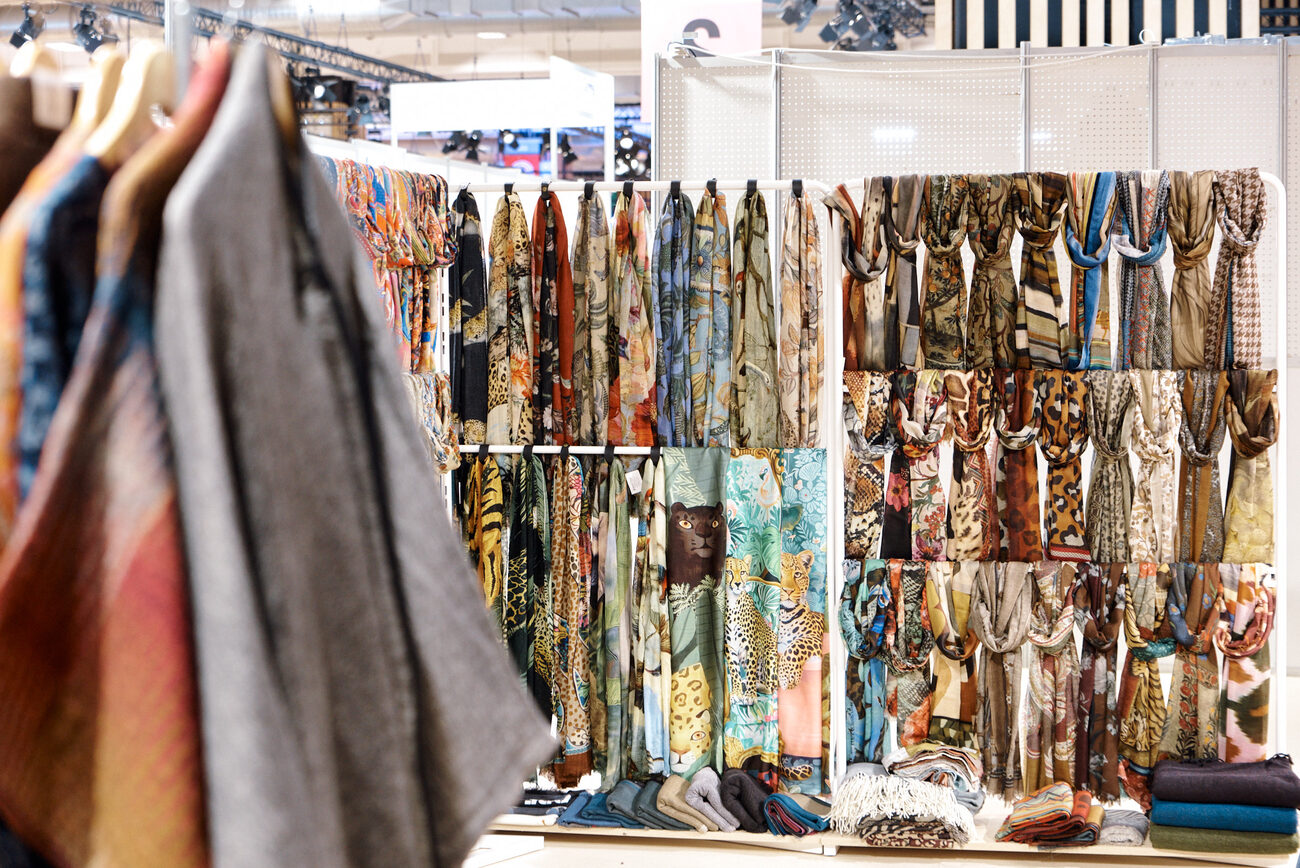
Wholesale is how most Indian brands will scale in Europe. You sell to shops, the shops sell to the public, and one good account can carry your brand into a market you'd never open alone.
But it's a system with its own rules, its own players and its own maths, and the brands that get the maths wrong lose money on every order. This guide maps the whole thing: who you sell through, how to price, how to prepare, and what to bring.
Know who you're selling through
Wholesale runs through intermediaries, and they don't all want the same thing. Pick the ones that match where your brand sits.
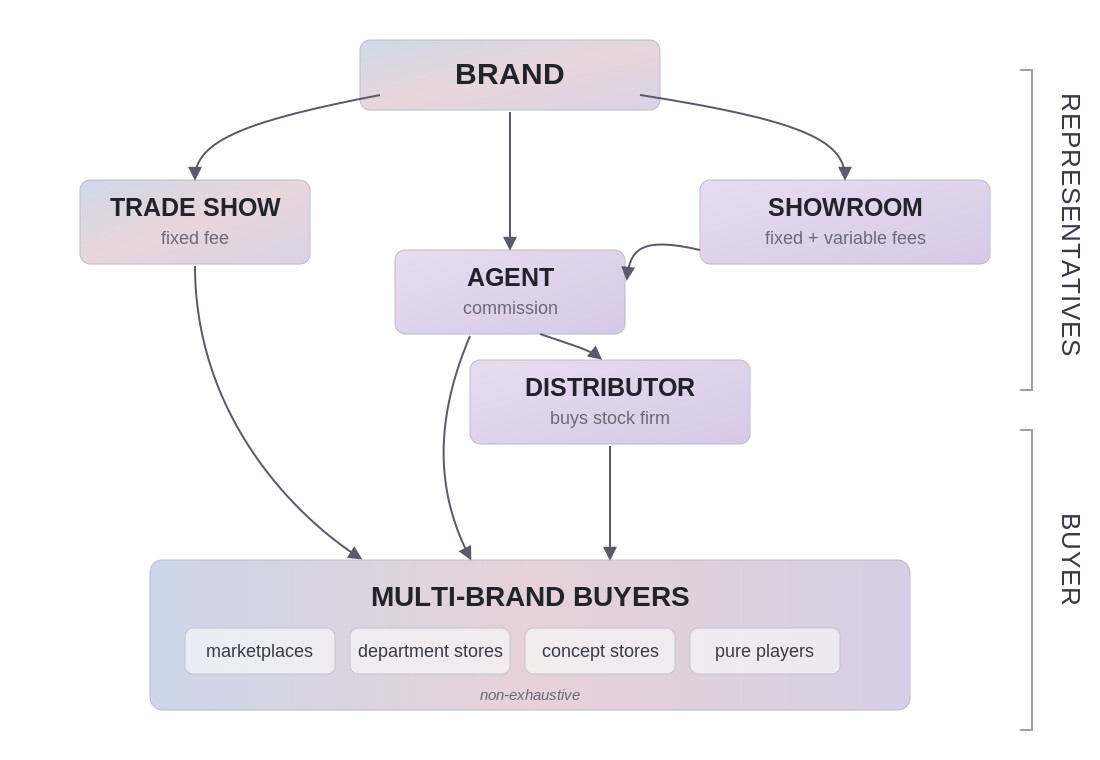
- Trade shows. Large halls where buyers from around the world come to source. You pay for a stand (around 1,000 euros per square metre in Paris), with no commission on sales. Easiest door to walk through, and everything is negotiable, so use your emerging-brand status.
- Agents. Represent your brand in a territory and sell B2B on commission, 12% for accessories, up to 15% for ready-to-wear. You're hiring their client book, so the contract matters more than the handshake.
- Showrooms. A curated space with a sales force, built around a coherent set of complementary brands. Usually 15 to 20% commission plus seasonal or annual fees. They take brands that already have a track record.
- Distributors. Buy your stock outright and resell it, often with exclusivity on a market. They carry the risk and the volume, but you lose control of where you're sold. Useful for distant or complex markets.
- Marketplaces. Digital platforms like Zalando, SSENSE, Faire or Ankorstore. Firm purchase or commission (25 to 35%). High reach, high cut, and you usually handle content and logistics.
- Department stores and concept stores. Printemps, Galeries Lafayette, Le Bon Marché. Huge prestige, hard terms: high margins, consignment, sometimes exclusivity. You're buying image as much as revenue.
One rule that catches people out: when you sign an agent for a territory, carve marketplaces and any buyers you've already signed out of their commission. A marketplace headquartered in their region shouldn't earn them a cut.
Wholesale is a financial decision, not a marketing one
Going wholesale should come from strategy, not vanity. It's a growth lever: more revenue, new markets reached quickly and cheaply, more visibility, and the image of the shops that carry you.
But it only works if your margins can fund it. A brand that goes wholesale without the margin to pay for stands, agents and marketing is buying its own slow decline. A few shops opened for image are fine if they're strong leverage. They should never cost you money.
Build your price properly
This is the part that decides whether wholesale makes you money. It's a chain, and every link has to hold.
Start from your cost price (PRI). Everything it takes to make the product before it ships: materials, labour, and the costs you can pin to a single piece, packaging, labels, quality control, inbound logistics. If you forget costs here, you lose margin everywhere after.
Cost to wholesale: about x2 to x2.5. Your wholesale price (the price you charge a B2B buyer, before tax) sits at roughly 2 to 2.5 times your cost price. Protect this margin. It's what pays for the show, the agent, the marketing, the whole wholesale push. Erode it and your costs of selling outrun your income.
Wholesale to retail: x2.5 to x3. The retailer then multiplies your wholesale price to set the shelf price, around 2.7 for ready-to-wear, 2.5 for accessories, 2.2 for beauty. That multiple covers their costs, margin, VAT and the risk of carrying you.
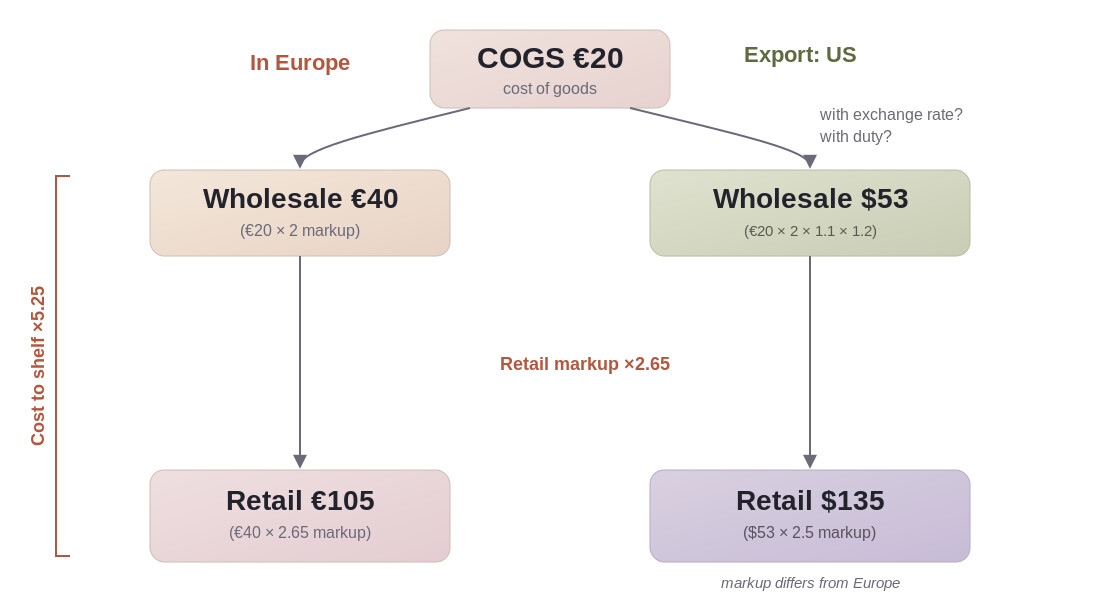
Put the chain together and the move from cost price to shelf price lands between x5 and x8. Work backwards from the shelf price a European shopper will actually pay, and check that every link still leaves you a margin. If it doesn't, the product isn't ready for this market.
The lever is your cost, not your margin. You can't really cut the retailer's multiple or your own. So the way to hit a market-real price is to control the cost price. That's where the work is. We cover the buyer-side maths in more depth in our piece on trade-show do's and don'ts.
One more on price coherence: keep your prices consistent across the collection, margin well on bestsellers, and accept thinner margins on a few image pieces. If an image piece can't carry a B2B price, keep it for your own direct sales instead of selling it at a loss to a shop.
Price for export: make it all-in
Selling across borders adds customs, duty, freight and conversion. Be explicit with the buyer about three numbers: your wholesale price before tax, the recommended retail price, and who pays for shipping and duty. That last one runs on Incoterms.
- Ex-works (EXW): the buyer handles freight, insurance and customs. Simple for a young brand, less order admin for you, but it leaves the buyer doing the hard maths.
- DDP (delivered, duty paid): your price includes freight, insurance and duty. It adds a percentage to your wholesale price, but it's a selling argument, because the buyer sees one clean, landed number.
For small shops, DDP often wins the order, because they can't calculate your freight and customs themselves. The easier you make the landed price, the faster the yes. One caution: if you also sell on your own website in a country where you wholesale, keep your site price aligned with your stockists' retail price, or you'll undercut the shops carrying you.
Prepare before the show
Wholesale runs a year ahead. The autumn-winter show sells next year's autumn-winter collection, on pre-order. Some shows now also run See Now Buy Now, where buyers order from stock, which suits less seasonal pieces like accessories.
Before you book anything, answer four questions: who are my B2B targets, which shows do they actually visit, which markets are my priority, and what budget can I really allocate? Then build a simple profit-and-loss for the show, registration, stand build, travel, stay, B2B tools, so you have a sales target and know whether it's reachable. And choose the right floor: that's the single biggest decision, and the one we help with first (see the shows we represent).
Your pitch: lead with your DNA
A buyer betting on an emerging brand is taking a risk. Your job is to make that risk feel small and the upside obvious.
Start with your brand DNA in one or two sentences: your positioning and values, your main inspiration, and what makes you singular. Then give the buyer the B2B facts they need immediately: wholesale price and margin, minimum order, delivery times, and your strongest categories. Back it with proof, named stockists, press, a strong recent show, a real community, reliable production.
How you say it matters as much as what you say. Be clear, brief, passionate but professional. Read the buyer, a concept store isn't a department store, and keep it a conversation, not a monologue. For how to run the stand itself, see our trade-show do's and don'ts.
Your documents: be ready before the first meeting
Buyers move fast, so your paperwork has to be ready and clean:
- Lookbook: carries the DNA and the mood of the collection, shot on model.
- Linesheet: your commercial bible. Packshots, sizes, colours, references, descriptions, composition, and prices (wholesale ex-works and recommended retail). Have it ready in PDF and Excel, in every currency you need, before the first appointment.
- Terms and conditions: delivery dates, minimums, payment terms. Get them reviewed by a lawyer before the show.
- Purchase order: this is your sales contract. Always get it signed.
The relationship is the business
Wholesale is a people business, and the order is just the start. A few habits that pay off:
- Prospect with links to your lookbook, not email attachments, so you can update them and see who's looking.
- Confirm an order the same day, with a clause that it's validated if the buyer doesn't reply within seven days.
- Build delivery windows wide enough to protect production, and split shipments so a buyer doesn't miss the start of the season.
- Ask your stockists for sell-through feedback, especially international ones, so you can steer the next season's orders.
Keeping a buyer is cheaper than finding one. A buyer in regular contact with a brand is far likelier to reorder, yet most brands only talk to buyers during selling season. Online showroom platforms now let you keep that contact alive year-round, sharing new pieces, restocks and campaigns between seasons. And keep an eye on the bigger picture: by one BCG study, 65% of brands have no visibility on their end customer after an indirect sale, so build post-sale touchpoints wherever you can.
Get equipped: the wholesale toolbox
Wholesale runs on a few tools. You don't need them all on day one, but you need the right ones as you grow. Start with an ERP, then connect compatible B2B tools as specific needs appear.
When you choose, weigh four things: whether the tools talk to each other, whether they fit your size and ambitions, how long they take to set up and learn, and the price against the return.
The main categories:
- ERP, the backbone for stock and orders. Zedonk or open-source Odoo suit smaller setups; Centric covers bigger structures with full product management.
- B2B wholesale platforms, to present the collection and take orders online. Joor and NuORDER are the established names.
- Online showrooms, digital spaces that keep buyers engaged between seasons with new pieces, restocks and campaigns.
- B2B marketplaces, like Faire and Ankorstore, to reach independent retailers at scale.
- E-commerce, such as Shopify, which can also run See Now Buy Now selling from stock.
- Landed-cost and duty tools, to quote a clean delivered price, which matters most when you export.
Don't over-tool early. One solid ERP plus the single B2B platform you actually need beats a stack of apps you never log into.
Wholesale in Europe rewards preparation: the right partner, a price that works at every link, documents that are ready, and a relationship you actually maintain. Get those right and one show can change your year.
We represent the shows where this happens and we prepare our brands on all of the above, from pricing to pitch. See the shows, read our Who's Next and Première Classe guides, then book a 30-minute call or start your application.